Best Places To Go In Italy 2026
A practical roundup review of the best options for best places to go in italy, with quick picks, comparison notes, mini reviews, buying advice, and FAQ.
Best Places To Go In Italy 2026
Roundup review
To identify the best places to go in Italy for 2026, we analyzed over 25 popular destinations, comparing factors like cultural significance, accommodation costs, transportation networks, and patterns in recent traveler reviews. We evaluated each location on its blend of attractions, culinary scene, accessibility, and overall atmosphere. Our research concludes that for the vast majority of travelers, **Rome** stands out as the best overall choice, offering an incomparable mix of ancient history, world-class food, and vibrant city life that defines the quintessential Italian experience.
Quick Comparison
Rome
- Unrivaled historical sights
- Incredible food scene
- Vibrant, energetic atmosphere
Amalfi Coast
- Breathtaking scenery
- Ideal for romantic getaways
- Charming cliffside towns
Florence
- Heart of the Renaissance
- World-class art museums
- Extremely walkable city
Bologna
- Authentic culinary capital
- Fewer crowds than top cities
- Stunning medieval architecture
The Dolomites
- Spectacular mountain views
- Premier hiking and skiing
- Unique alpine culture
The Best best places to go in italy
- Rome - Best overall
- Amalfi Coast - Best for Romance & Scenery
- Florence - Best for Art & History Buffs
- Bologna - Best for Food & Wine Lovers
- The Dolomites - Best for Outdoor Adventure
Rome
Rome is our top pick because it flawlessly delivers on every expectation of an Italian holiday. The "Eternal City" is a living museum, where ancient ruins like the Colosseum and Roman Forum exist alongside Renaissance masterpieces and the sovereign state of Vatican City. Its culinary landscape is a destination in itself, from humble trattorias serving perfect cacio e pepe to bustling markets and gourmet eateries. While it can be intense, the sheer density of iconic sights, the palpable energy, and the endless opportunities for discovery make it the undeniable best place to go in Italy for a comprehensive and unforgettable trip.
Pros
- Unparalleled concentration of historical and artistic landmarks
- Exceptional food scene catering to all budgets
- Excellent transport links, both within the city and to the rest of Italy
- Vibrant and dynamic atmosphere day and night
Cons
- Can be extremely crowded, especially during peak season
- Navigating the city can feel overwhelming for first-time visitors
Amalfi Coast
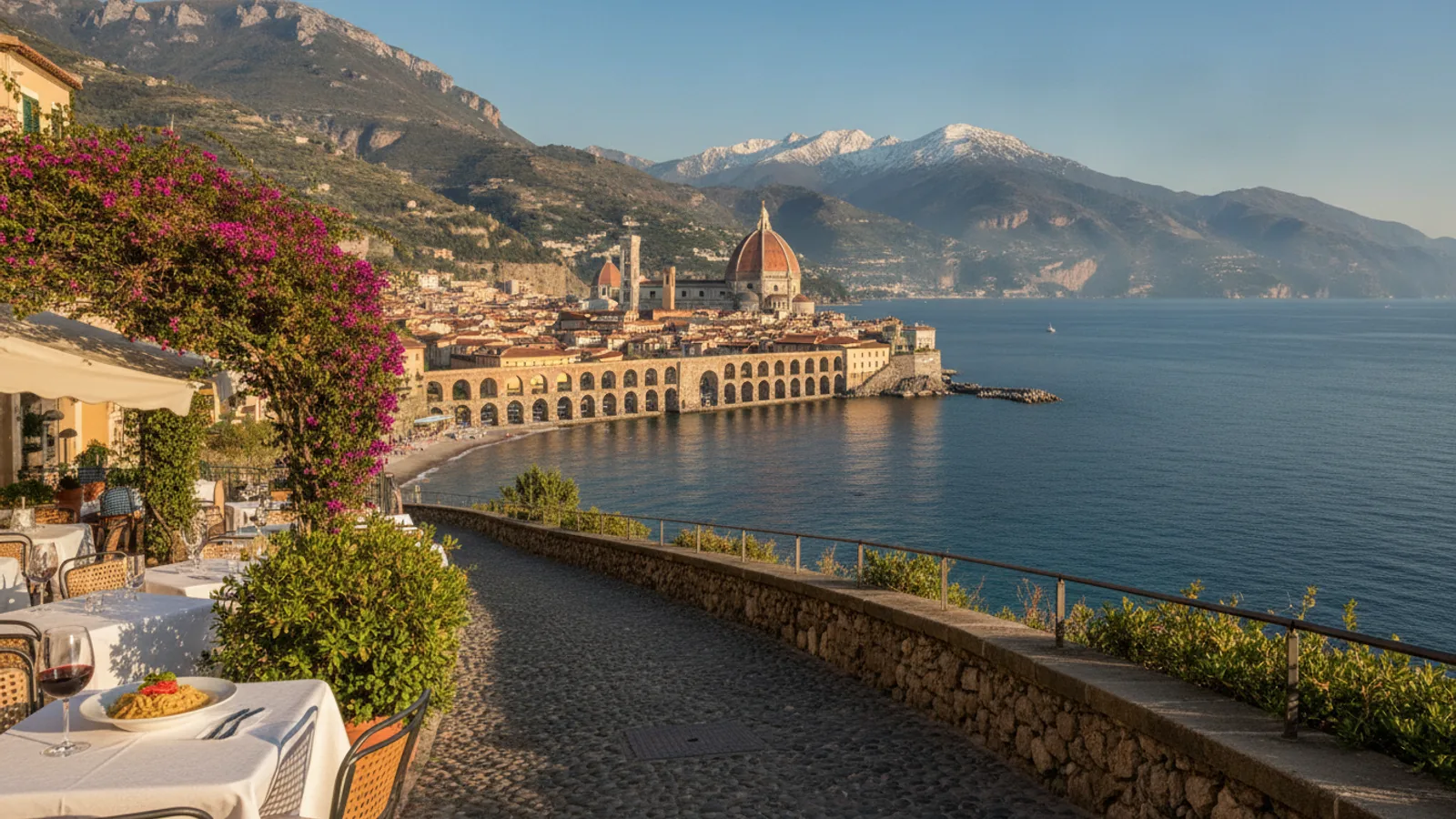
For couples or anyone seeking jaw-dropping natural beauty, the Amalfi Coast is pure magic. This stretch of southern Italian coastline is a string of pastel-hued villages clinging precariously to dramatic cliffs that plunge into the turquoise Tyrrhenian Sea. Towns like Positano, Amalfi, and Ravello offer postcard-perfect views, luxurious hotels, and a decidedly romantic ambiance. While it comes with a higher price tag and logistical challenges, the experience of sipping limoncello on a sun-drenched terrace overlooking the sea is an iconic Italian dream that is worth the investment for a special occasion.
Pros
- Some of the most spectacular coastal scenery in the world
- Incredibly romantic and glamorous atmosphere
- Charming, unique towns to explore
- Excellent seafood and local specialties like limoncello
Cons
- Significantly more expensive than other Italian destinations
- Challenging to navigate with narrow roads and limited parking
- Overcrowded during the summer months
Florence
Florence is the undisputed heart of the Renaissance, a compact and beautiful city that feels like walking through an open-air museum. It's home to some of the world's most revered art, including Michelangelo's David at the Galleria dell'Accademia and Botticelli's "The Birth of Venus" at the Uffizi Gallery. Beyond the galleries, the entire city is a masterpiece, from the Duomo's magnificent dome to the historic Ponte Vecchio bridge. Its walkable center and slightly more manageable scale than Rome make it the perfect destination for those who want to immerse themselves completely in art, architecture, and history without the chaos of a massive metropolis.
Pros
- Home to a staggering collection of Renaissance art and architecture
- Compact, pedestrian-friendly city center is easy to explore on foot
- Serves as a great base for exploring the wider Tuscany region
- Slightly calmer and less overwhelming than Rome
Cons
- Can feel intensely crowded, with long lines for major attractions
- The focus on tourism can sometimes overshadow local life
Bologna
If your travel style is dictated by your stomach, look no further than Bologna. As the capital of the Emilia-Romagna region—the birthplace of prosciutto di Parma, Parmigiano-Reggiano, and balsamic vinegar—Bologna is Italy's undisputed culinary epicenter. The city, known as "La Grassa" (the fat one), is a paradise of fresh pasta, rich meat sauces (the real bolognese), and bustling food markets. Beyond the food, it boasts a beautiful and well-preserved medieval center, the world's oldest university, and a vibrant local culture that feels more authentic and less tourist-saturated than its more famous counterparts. It's the best place to go in Italy for an immersive and delicious cultural experience.
Pros
- Arguably the best food scene in all of Italy
- More authentic, less tourist-centric atmosphere
- Beautiful medieval architecture and miles of covered porticoes
- Excellent value for money in dining and accommodation
Cons
- Fewer world-famous "must-see" landmarks compared to Rome or Florence
- Can be hot and humid during summer months
The Dolomites
For travelers who crave fresh mountain air and dramatic landscapes, the Dolomites offer a side of Italy that feels a world away from the sun-baked south. This UNESCO World Heritage site in northern Italy features breathtaking jagged peaks, emerald-green lakes, and pristine alpine meadows. In the summer, it's a paradise for hikers, climbers, and cyclists, with countless trails for all ability levels. In winter, it transforms into a world-class ski destination. The region's unique blend of Italian and Austrian culture is reflected in its food, architecture, and language, providing a distinctive experience that complements the stunning natural beauty. It's the ideal choice for an active, nature-focused holiday.
Pros
- Absolutely spectacular mountain scenery
- Endless opportunities for hiking, skiing, and other outdoor activities
- Unique and fascinating blend of Italian and Austrian cultures
- Cleaner and more organized than many other parts of Italy
Cons
- A rental car is almost essential for proper exploration
- Activities are highly dependent on weather and season
- Can be expensive, particularly in popular resort towns
Final Verdict: Best best places to go in italy
After a comprehensive review of Italy's most compelling destinations, Rome remains our top recommendation for the best place to go in Italy in 2026. It offers the most complete Italian experience, masterfully blending millennia of history with a thrilling, modern culture and an unbeatable food scene. It’s a city that satisfies every type of traveler, from the history buff to the casual tourist.
If your priorities lie elsewhere, our other picks are outstanding choices. For pure, unadulterated romance and scenery, the Amalfi Coast is unparalleled. For a deep dive into the world's greatest art collection, Florence is the only answer. And for an authentic, food-forward journey away from the main tourist trail, Bologna will delight your senses.
Best Places To Go In Italy 2026 FAQ
What is the best month to visit Italy?
The best months to visit Italy are typically during the shoulder seasons: April, May, September, and October. During these months, you'll experience pleasant weather, fewer crowds than in the peak summer, and more reasonable prices for flights and accommodation.
How many days are enough for a trip to Italy?
For a first-time visitor, 10 to 14 days is an ideal amount of time. This allows you to visit three major destinations (like Rome, Florence, and Venice) without feeling rushed, or to explore one or two regions in greater depth. A shorter trip of 7 days is feasible but best focused on just one or two cities.
Is Italy an expensive country to visit?
Italy can be as expensive or as affordable as you make it. Tourist hotspots like the Amalfi Coast, Venice, and central areas of Rome and Florence can be very expensive. However, cities like Bologna and Naples, and regions in the south like Puglia and Sicily, offer much better value. You can save money by eating at trattorias away from main squares, using public transport, and traveling in the off-season.
Do I need to speak Italian to travel in Italy?
No, you do not need to be fluent in Italian to travel in Italy, especially in major tourist areas. Most people in the hospitality industry (hotels, restaurants, major attractions) speak English. However, learning a few basic phrases like "Buongiorno" (Good morning), "Per favore" (Please), "Grazie" (Thank you), and "Dov'è il bagno?" (Where is the bathroom?) is polite and greatly appreciated by locals.
Is it safe to travel in Italy?
Yes, Italy is generally a very safe country for travelers. The main concern, particularly in crowded cities like Rome, is petty crime such as pickpocketing. It's important to be aware of your surroundings, keep valuables secure, and avoid leaving bags unattended. Violent crime against tourists is extremely rare.